


Oversikt: Hvorfor vaskemaskinprisene er mer ustabile
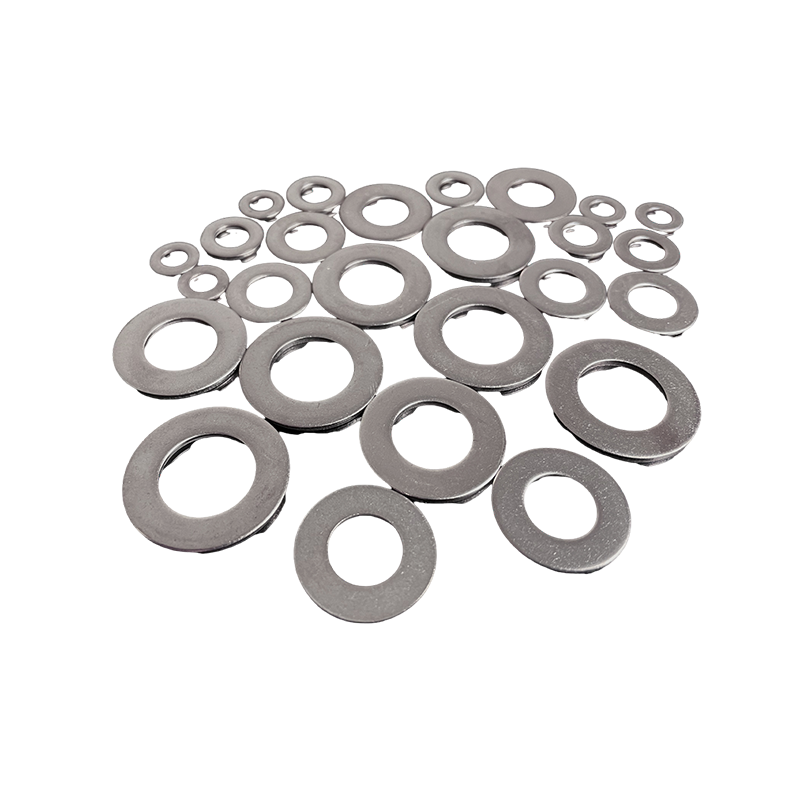
Skiver i rustfritt stål are a low-margin, high-volume commodity whose price is determined not just by sheet or coil prices but by an interplay of feedstock costs, regional mill margins, freight and lead-time risk, and demand from construction, automotive and industrial OEMs. Recent years have shown that even modest moves in nickel, ferrochrome or scrap can transmit rapidly into washer quotes because thin-gauge processing and precision stamping add discrete unit costs that suppliers pass on quickly. This article breaks the main drivers into practical categories and ends with sourcing and inventory tactics for purchasers and suppliers. :contentReference[oaicite:0]{index=0}
Grunnleggende råvarer: nikkel, krom og skrap
The most direct input to austenitic stainless (e.g., 304/316) is nickel and chromium content. Nickel price swings influence 300-series mills' raw-cost; ferrochrome affects 200/400-series grades and alloy premiums. When nickel or ferrochrome spikes, mills raise coil prices and service centers widen spreads. Conversely, weak stainless demand in a regional market (for example a slowdown in construction) can lead to exporters discounting inventory — causing short-term price drops followed by tightness when inventories deplete. :contentReference[oaicite:1]{index=1}
Hva kjøpere bør se
Track LME nickel and ferrochrome indices, stainless scrap prices, and regional mill premiums. For contract negotiations, index-link clauses tied to nickel or scrap are common; buyers without index protection risk abrupt increases. :contentReference[oaicite:2]{index=2}
Logistikk, frakt og ledetidsrisiko
Freight volatility and port congestion amplify price moves for commoditized parts like washers. Higher container rates or reduced sailings increase landed cost per kilogram, while longer lead times raise working-capital and safety-stock expenses. The impact is greatest for smaller buyers who cannot aggregate shipments: the per-unit freight share is higher and sudden rate spikes are harder to absorb. Recent UNCTAD and market analyses show that container costs and geopolitical routing issues have kept freight costs structurally above pre-crisis levels, which continues to transmit into import-dependent fastener prices. :contentReference[oaicite:3]{index=3}
Driftsspaker for å redusere logistikkeksponering
- Konsolider innkjøpsordrer til fullcontainerlaster (FCL) når det er mulig for å redusere frakten per enhet.
- Bruk dual-sourcing mellom innenlandske og nærliggende regionale fabrikker for å sikre ledetidsrisiko.
- Forhandle fraktallokeringsklausuler i langsiktige kontrakter eller kjøp terminfraktkapasitet i lavprismåneder.
Handelspolitikk, tollsatser og regionalisering
Trade measures and shifting sourcing strategies have become pronounced price drivers. Tariffs or antidumping duties push buyers toward local mills or alternate origins, where supply tightness may support higher prices even if global raw-material costs fall. In some markets, post-tariff reshoring has allowed domestic mills to secure higher blended margins, which feeds through into distributor and component prices. Buyers exposed to duty risk should explicitly model landed cost including potential tariff scenarios. :contentReference[oaicite:4]{index=4}
Etterspørselssykluser og lagerdynamikk for vaskemaskiner
Washers follow larger cyclical end-markets: construction, automotive, heavy equipment, electronics, and renewables. A surge in infrastructure spending or EV production raises demand for corrosion-resistant hardware; conversely, a slowdown in construction reduces stainless consumption. Because washers are produced in high volumes and small pack sizes, distributors often carry lower days-of-inventory relative to coils. That makes prices sensitive to sudden order uplifts or distributor stock-outs — situations where lead-time premiums appear quickly. Industry forecasts project steady growth in fasteners overall, but regional timing varies and creates transient tightness. :contentReference[oaicite:5]{index=5}
Inventar taktikk
- Klassifiser SKU-er etter kritikalitet og ledetid; holde høyere sikkerhetslager på spesialkvaliteter med lang bly.
- Bruk leverandørstyrt inventar (VMI) for høyhastighets-SKU-er for å jevne ut forsyningssvingninger.
- Implementer rullende 90- til 180-dagers prognoser knyttet til kontraktsfestede prisbånd der det er mulig.
En enkel kostnadsoversiktstabell (eksempel)
| Komponent | Eksempel % av landets enhetskostnad |
| Råmateriale (spole/ark) | 55 % |
| Bearbeiding og stempling | 20 % |
| Pakking, testing, QA | 5 % |
| Frakt og avgifter | 10 % |
| Distributørmargin og lagerkostnad | 10 % |
Praktiske innkjøpsstrategier
Buyers and suppliers that survived recent cycles typically combine several actions: contract indexation to raw-materials, multi-sourcing with regional partners, flexible order batching, and active freight management. For engineered washers or plated/treated parts, move to make-to-order where possible to avoid inventory obsolescence. For commodity washers, lock in price bands for 3–6 months while allowing quarterly renegotiations tied to nickel/scrap. Suppliers should publish simple lead-time and surcharge schedules to reduce disputes. :contentReference[oaicite:6]{index=6}
Konklusjon: forvent periodisk volatilitet, administrer med data
Globale endringer i forsyningskjeden betyr at prisene på vaskemaskiner i rustfritt stål vil fortsette å bevege seg med råvareindekser, logistikkkostnader og regionalpolitiske endringer. Den mest effektive responsen er operasjonell: bedre SKU-segmentering, betingede kontrakter som transparent deler råvarerisiko, fraktstrategi og aktiv overvåking av nikkel-, ferrokrom- og skrapmarkeder.

 No. 2 Bridge, Chuangxin Road, Dainan Town, Xinghua City, Taizhou City, Jiangsu-provinsen
  +86-17315333748(Wechat)
 +86-17315333748(Wechat/Whatsapp)

